


Subway Princess Runner
Ivy
I first approached Subway Princess Runner expecting a quick arcade distraction, and that is exactly where it makes the most sense. The game puts me straight into an endless run, where the immediate goal is simple: keep moving, react quickly, and survive for as long as possible. There is no long setup before the action begins, so it is easy to play when I have only a few spare minutes.
Developed by Ivy, this free arcade game is built around a very familiar mobile format: the character runs continuously while I guide her through a changing path. The appeal is not a complicated story or a deep role-playing system. It is the clean rhythm of seeing an obstacle, responding in time, collecting useful items, and trying to beat the result from the previous attempt.
That simplicity explains why it has become such a widely played title. It has passed 500 million installs and holds a 4.4 average from around 2 million ratings. Those figures suggest a broad audience, but they do not automatically make it right for everyone. After spending time with it, I see it as a good fit for players who enjoy fast reflex challenges and a less suitable choice for anyone looking for a carefully paced adventure or a substantial offline campaign.
Related News

Temple Run: Why This Endless Runner Still Captivates
Why Avatar World Keeps Players Coming Back
How the first action sets the whole game in motion
The first important decision is not strategic in the traditional sense; it is physical. I need to guide the runner through the track while the speed and pressure build. The controls are designed to be understood quickly, which matters because an endless runner cannot afford a complicated command system. My attention stays on the lane ahead rather than on menus, equipment screens, or lengthy instructions.
That immediate start is one of the strongest parts of the experience. If I am waiting for a bus, taking a short break, or simply want something more active than scrolling through social media, I can begin a run without committing to a long session. The game does not ask me to remember a large set of rules before I can enjoy it. I learn through movement, mistakes, and repetition.
Related News

Why WhatsApp Messenger Still Makes Everyday Communication Feel Easy

Jurassic World: The Game Is the Better Dino Tycoon for Strategic Players

Threads in Real Life: Who Should Join, Lurk, or Leave

How SHEIN Turned Shopping Into an Endless Content Feed

How to Make Fortnite Feel Smarter on Mobile

Should You Switch to Microsoft Outlook on Mobile?
The familiar subway setting gives the action a clear visual identity. Tracks, barriers, trains, and surrounding scenery create a constant sense of forward motion. Even when the basic objective remains unchanged, the environment keeps asking me to look ahead. I cannot simply stare at the score because the next problem can arrive quickly, and a delayed reaction ends the attempt.
My practical advice is to treat the opening seconds as a calibration period. Rather than immediately chasing every collectible, I first watch the spacing between lanes and obstacles. This helps me settle into the control response before the run becomes demanding. It is a small change in approach, but it prevents the common mistake of making an unnecessary move just because an item appears tempting.
The game is also easy to understand for younger players, although its Teen content rating is worth keeping in mind for families choosing games for children. Adults who want a quick reflex title will probably grasp the format immediately. Players who dislike repeated running, bright arcade presentation, or games that depend on constant attention may feel that the basic structure becomes familiar too soon.
Gallery
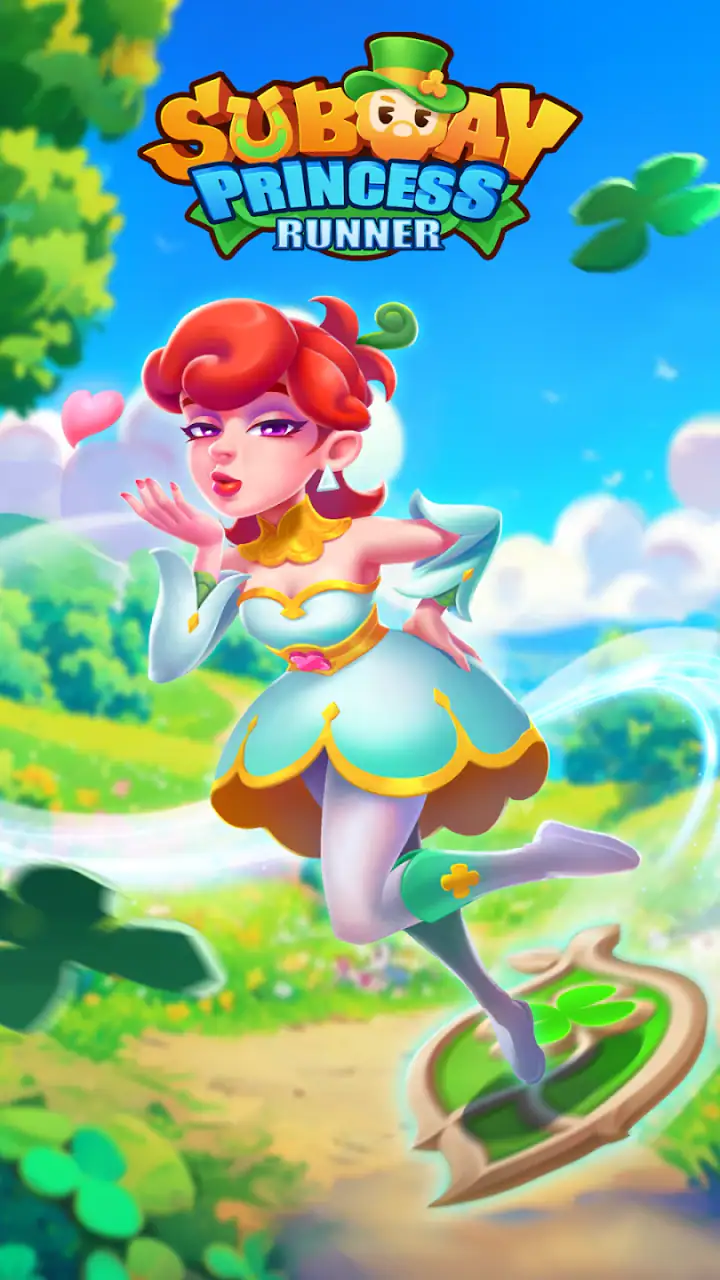
The feedback rhythm makes short attempts feel active
What keeps each run from feeling completely passive is the steady exchange between action and feedback. I make a movement, see the runner change position, avoid or hit an obstacle, and immediately understand whether that decision worked. The response is fast enough that I can connect success or failure to my own timing rather than wondering what happened.
This rhythm gives the game its real personality. The track moves toward me, my eyes scan for danger, and my hands make small corrections. When I pass a difficult section, the reward is not only a higher score; it is also the feeling that I read the situation correctly. When I fail, the cause is usually clear enough to make another attempt feel justified.
There is a useful difference between a mistake caused by poor attention and one caused by taking a calculated risk. If I move for a collectible while an obstacle is approaching, I am choosing a trade-off. The item may help the run, but survival usually matters more. I found that safer routes often produce better sessions than trying to grab everything in sight.
One non-obvious habit that improved my play was looking beyond the nearest obstacle. The first barrier is rarely the only thing that matters. A quick move may avoid it but place me in a worse lane for what follows. I try to read the next section before committing, especially when the track presents several possible directions. This turns the game from simple tapping into a modest exercise in planning under pressure.
Sound and visual reactions also contribute to the feedback loop, even though the game does not need a complex explanation to communicate what is happening. A successful maneuver feels immediate, while a collision breaks the flow sharply. That contrast is important: the game rewards concentration by letting a smooth run continue, then makes a lapse impossible to ignore.
Still, the same feedback design can become tiring. Because the action is continuous, there is little room to relax during a serious attempt. Someone looking for a calm game to play while watching television may find that this one demands more attention than expected. It works better when I can give the screen my full focus, even if the session itself lasts only a short while.
Rewards give the run a reason to continue
The immediate reward is progress within the current attempt. I want to travel farther, collect more, and finish with a stronger result than before. That goal is easy to understand and does not require a complicated explanation. The best moments come when I remember a difficult section from an earlier run and handle it cleanly the next time.
There is also a psychological reward in improving through repetition. I may fail at a particular pattern several times, then suddenly recognize the correct timing. That improvement feels personal because it comes from learning the route and controlling my reactions, not from simply waiting for a timer or reading a dialogue choice.
Players should approach the collectible side of the game with some discipline. I do not regard every item as worth the risk. If an object sits beside a dangerous obstacle, I ask whether taking it will genuinely improve the attempt or merely satisfy the urge to collect. This is one of the clearest trade-offs in the game: a greedy route can be exciting, but a cautious route gives me more time to build a strong run.
Another useful workflow is to separate practice runs from score runs. During practice, I focus on learning how the track presents danger and accept that the result may be poor. During a score attempt, I avoid experimental movements and use the safer decisions I already understand. Mixing those two purposes can be frustrating because every mistake feels like it has ruined a serious attempt.
The free entry point makes this structure approachable. I can try the core game without paying, while optional in-app purchases range from $0.99 to $99.99 per item. That range means I would recommend setting a spending limit before handing the device to a child or to anyone who tends to buy impulsively during a competitive session. The game is playable as a free experience, but the presence of purchases is still something to consider when deciding whether it belongs on a family device.
I also think the reward design works best for people who enjoy personal improvement rather than a fixed ending. There is no obvious point at which I can say I have completed the whole experience. The satisfaction comes from another good run, a cleaner response, or a longer stretch without a mistake. If I need a story conclusion or a clearly defined final level, this endless format may feel unsatisfying.
Why every failed run invites a reset
The reset is central to the game’s appeal. Once a run ends, I am usually aware of the moment that caused it. Maybe I reacted too late, changed lanes without checking what came next, or reached for a reward when staying safe would have been wiser. Because the cause is visible, restarting does not feel like beginning from nothing. It feels like testing a revised decision.
This is where the action-feedback-reward cycle becomes convincing. I act, receive an immediate result, gain progress or a better understanding, lose the run through a mistake, and then restart with a small lesson in mind. The next session begins because the previous one gave me a specific reason to try again rather than because the game merely tells me to continue.
For everyday use, that reset structure is convenient. I can play one attempt while waiting for food, stop after a collision, and return later without needing to remember a complicated plot. It also makes the game suitable for short breaks where a large adventure game would be awkward. On the other hand, the same convenience can encourage “one more run” behavior. Since each attempt is quick to start, it is easy to spend longer than planned.
My suggestion is to use the end of a run as a natural stopping point. If I have already made several rushed attempts, the quality of my reactions usually drops. Taking a break can be more useful than forcing another try, especially because the game depends on visual attention and timing. The reset is there to support learning, not to pressure me into playing without rest.
Device compatibility is reasonably approachable for modern users because the current version, 8.5.0, requires Android 6.0 or later. That makes it accessible on many older Android devices, although the actual comfort of play will still depend on screen responsiveness and general device performance. For this kind of game, a slight delay in touch input is more damaging than it would be in a turn-based title, so players with an aging phone should pay attention to how reliably their swipes register.
The game is available at no upfront cost, which lowers the barrier to testing it. I would still advise checking the purchase settings before letting someone else use the device. The most important question is not whether the game can be started for free, but whether its repeat-play loop matches the player’s habits. Someone who enjoys brief, competitive attempts will likely appreciate it; someone who dislikes restarting after failure may quickly lose patience.
Where it stands beside other endless runners
Compared with slower arcade games, this title feels more demanding because the screen keeps moving and the response window becomes part of the challenge. Compared with story-driven mobile adventures, it offers much less narrative motivation but gets to the playable part far faster. I would choose it over a puzzle game when I want movement and reflexes, but I would choose a level-based platformer when I want a sense of completion.
Its strongest alternative is another endless runner, and the comparison comes down to what I value. Some runners emphasize missions, character development, or a larger collection system. Here, the basic pleasure is more immediate: read the path, move at the right moment, and see how long the run survives. That focus makes it easy to understand, but it can also make the long-term experience feel repetitive if I need frequent changes in objectives.
I would recommend it to commuters, casual arcade fans, and players who enjoy improving through short repeated attempts. It is also a good choice for someone introducing a younger teenager to reflex-based mobile games, provided the Teen rating and optional purchases fit the household’s rules. The controls are approachable, and the game does not demand that I study a large manual before having fun.
I would skip it if my priority is a rich campaign, relaxed pacing, or meaningful exploration. It is not the best companion for multitasking because the obstacles require attention. I would also hesitate to recommend it to anyone who becomes frustrated by repetition or who prefers rewards that do not depend on surviving another attempt. In those cases, a puzzle game with discrete stages or a platformer with checkpoints may provide a more satisfying structure.
My verdict on the complete play loop
After using Subway Princess Runner as both a quick diversion and a longer sequence of attempts, I think its design succeeds because every part leads naturally to the next. The first movement is easy to understand, the feedback is immediate, the reward is visible in continued progress, and the reset offers a clear opportunity to correct a mistake. The reason to begin another session is not hidden: I want to react better than I did before.
The game’s limitations are closely tied to that strength. Its endless format can feel repetitive, its constant motion is not relaxing, and optional purchases deserve sensible boundaries. The Teen rating also means I would not treat it as an automatic choice for every child. These are not minor details to overlook, especially for families or players who want a game with a definite ending.
For me, the best way to enjoy it is in focused bursts. I play with a specific aim, such as learning a difficult section, improving my route choices, or simply completing one clean attempt. I do not chase every collectible, and I stop when my reactions become careless. That approach keeps the loop engaging instead of turning it into an endless series of frustrated restarts.
As a free arcade game from Ivy, it offers a straightforward reason to keep coming back: the controls are immediate, the challenge is readable, and improvement can happen within minutes. Its large audience and over 2 million ratings reflect broad appeal, but my recommendation is more specific. Choose it if you want a fast reflex test that starts quickly and rewards better timing. Look elsewhere if you need story, calm progression, or a final destination. For the right player, the next run begins because the last one taught just enough to make another attempt feel worthwhile.
FAQs for Subway Princess Runner
What is Subway Princess Runner?
Subway Princess Runner is an endless running game available on Android and iOS. Players navigate through various environments, dodging obstacles and collecting coins to unlock characters and power-ups. The game is similar to other popular endless runners, offering engaging gameplay and vibrant graphics. Ideal for quick gaming sessions.
How do I unlock new characters in Subway Princess Runner?
To unlock new characters in Subway Princess Runner, you need to collect coins during gameplay. These coins can be used to purchase different characters from the in-game store. Each character may have unique abilities or aesthetics, enhancing the gaming experience and providing players with variety.
Are there in-app purchases in Subway Princess Runner?
Yes, Subway Princess Runner offers in-app purchases. Players can buy coins or special items, which can help in progressing through the game faster or unlocking characters and power-ups. While the game is free to play, these purchases can enhance the experience but are not necessary to enjoy the game.
What are the system requirements for Subway Princess Runner?
Subway Princess Runner requires a smartphone with Android 4.1 or higher, or an iOS device with iOS 9.0 or later. The game is optimized for both smartphones and tablets, ensuring smooth gameplay across different devices. Ensure your device is updated to meet these specifications for optimal performance.
Is Subway Princess Runner suitable for children?
Subway Princess Runner is suitable for children, as it features bright graphics and simple controls. However, parents should be aware of in-app purchases and ads. It’s advisable to supervise younger children during gameplay or restrict purchases and ads through parental controls to ensure a safe experience.
Pros
- Engaging endless runner gameplay.
- Vibrant and colorful graphics.
- Smooth and responsive controls.
- Regular updates with new themes.
- Free to play with optional purchases.
Cons
- Contains ads that can be distracting.
- In-app purchases can be pricey.
- Repetitive missions over time.
- Requires internet for some features.
- Battery drain on older devices.


